
Fellowship Interview Preparation: How to Set Yourself Apart
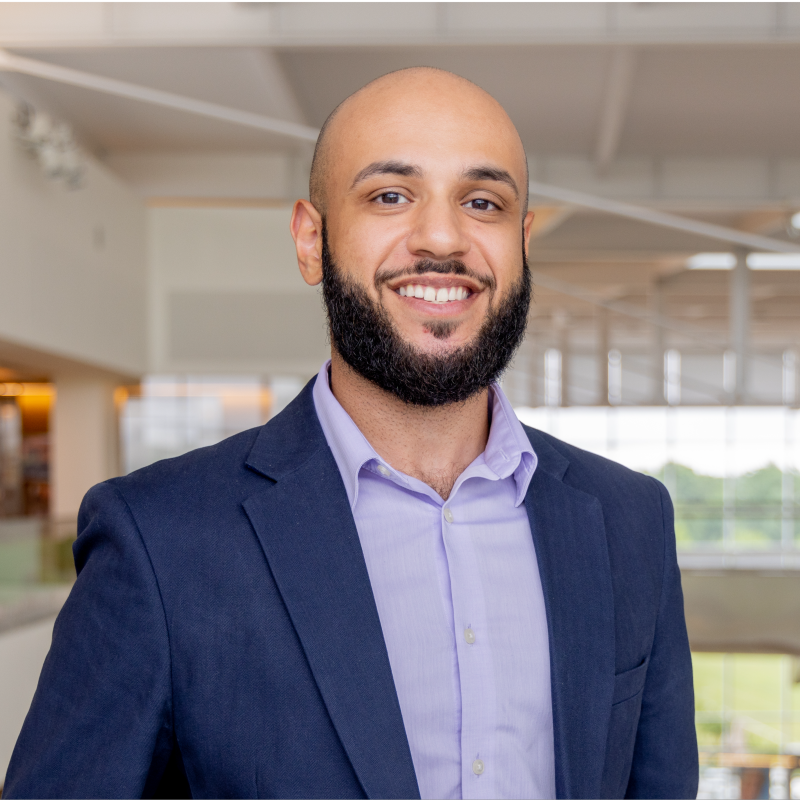

Author: Karim Abdelhalim, PharmD, RPh
Views are my own and do not reflect my employer.
By the time fellowship interview invitations begin arriving, most candidates have already invested countless hours networking, refining their CVs, and preparing application materials. However, one of the biggest mistakes applicants make is assuming that their qualifications alone will carry them through the interview process.
The reality is that many fellowship candidates have strong academic records, leadership experiences, research involvement, and professional accomplishments. What often separates successful candidates from the rest is their ability to effectively communicate their experiences, tell a compelling story, and demonstrate why they are the right fit for a particular functional area and fellowship program.
Interview preparation should begin well before invitations arrive. The more intentional and structured your preparation, the more confident and authentic you will appear during interviews.
Start by Knowing Your Story
Before practicing interview questions, take time to reflect on your journey and the experiences that have shaped your career interests.
Interviewers are not simply evaluating your accomplishments, they are trying to understand who you are, what motivates you, and how your experiences have led you to pursue a fellowship.
At a minimum, you should be able to confidently answer the following questions:
Tell me about yourself.
Why are you interested in the pharmaceutical industry?
Why are you interested in your chosen functional area?
Why are you interested in this specific fellowship program?
What are your long-term career goals?
Master Your Elevator Pitch
One question you should expect in nearly every interview is, "Tell me about yourself." This is often the first question asked and sets the tone for the remainder of the interview.
Think of your response as a 60-second elevator pitch that provides the interviewer with a concise overview of who you are, where you've been, and where you hope to go. An effective elevator pitch should be conversational, well-rehearsed, and adaptable-not memorized word-for-word.
Consider including the following components:
Your educational background
Your hometown or personal background (briefly)
Two or three key experiences from your CV
Your current professional interests and target functional area
A personal interest or hobby that helps the interviewer get to know you beyond your CV
One of the best ways to refine your elevator pitch is to use it whenever you introduce yourself to professionals. Whether you're attending a networking event, scheduling a coffee chat, or participating in an informational interview, treat every introduction as an opportunity to practice. By the time fellowship interviews begin, your introduction should feel natural and confident.
Build a Cohesive Narrative
The remaining interview questions should all reinforce the same story.
Rather than treating each question as an independent response, think about how your answers connect to one another. Your experiences, interests, and career goals should naturally build toward explaining why you are pursuing a particular functional area and fellowship.
For example, if you are interested in Clinical Development, can you clearly explain how your research experiences, clinical rotations, leadership activities, or patient care experiences cultivated that interest? If you are pursuing Medical Affairs, can you describe the experiences that sparked your passion for scientific communication, evidence generation, and medical education?
The strongest candidates don't simply list their accomplishments-they connect the dots for the interviewer. By the end of your interview, the interviewer should have a clear understanding of your journey, your motivations, and why you are an excellent fit for the fellowship. Authenticity and intentionality are what make your story memorable.
Master the STAR Method
Behavioral and situational questions make up a large portion of fellowship interviews. For these questions, I strongly recommend using the STAR method:
Situation
Task
Action
Result
The STAR framework helps organize your thoughts while ensuring your response remains concise and impactful.
One common mistake candidates make is spending too much time explaining the situation and not enough time discussing their actions. Remember that interviewers are most interested in understanding what you did, how you approached the challenge, and what you learned from the experience.
As you practice, focus on emphasizing the Action and Result portions of your response.
Understand the Three Types of Interview Questions
Throughout the interview process, most questions can be categorized into three primary groups.
1. Motivation Questions
These questions assess your interest in the fellowship, company, and functional area.
Examples include:
Why are you interested in Medical Affairs?
Why do you want to pursue a fellowship?
Why are you interested in our program?
Why are you interested in our company?
These questions should never catch you off guard. In many cases, they are among the first questions asked during an interview.
Take time to research each company and program beforehand. Review the fellowship brochure, understand the structure of the program, and identify what specifically attracts you to the opportunity.
Generic answers are easy to recognize. Instead, demonstrate a genuine understanding of the program and explain how it aligns with your interests and career goals.
2. Behavioral and Situational Questions
This is often the largest category of questions you will encounter.
Examples include:
Tell me about a time you faced a challenge.
Describe a conflict you experienced within a team.
Tell me about a leadership experience.
Describe a time you received difficult feedback.
Tell me about a time you failed.
These questions evaluate how you have handled real-life situations and often serve as predictors of future performance.
One of the most effective preparation strategies is to identify five to seven key experiences from your CV and become extremely familiar with them.
Think about your leadership positions, research projects, rotations, work experiences, presentations, and extracurricular activities. Many interview questions can be answered using the same experiences if you adapt the story appropriately.
Knowing your experiences thoroughly allows you to respond confidently and naturally rather than searching for examples during the interview.
3. Unexpected Questions
Occasionally, interviewers will ask questions that seem completely unrelated to your application.
These questions may be designed to assess critical thinking, communication skills, creativity, or your ability to remain composed under pressure.
Examples may include:
• Teach me something in one minute.
• What is a misconception people have about you?
• If you could have dinner with anyone, who would it be and why?
Unlike behavioral questions, there is no perfect preparation strategy for these questions.
When faced with an unexpected question, do not feel pressured to answer immediately. It is perfectly acceptable to pause, gather your thoughts, and formulate a response. Interviewers are often more interested in your thought process than in the specific answer itself.
Know Your CV Inside and Out
Every item on your CV is fair game for discussion.
If an interviewer asks about a research project, leadership role, poster presentation, or rotation experience, you should be prepared to discuss it comfortably and in detail.
Review your CV before every interview and refresh your memory on key accomplishments, challenges, outcomes, and lessons learned from each experience.
A simple rule to remember is this: if it is on your CV, you should be able to confidently discuss it.
Practice, Practice, Practice
Interviewing is a skill, and like any skill, it improves with repetition.
Conduct mock interviews with mentors, fellows, faculty members, or trusted peers who can provide honest and constructive feedback. Consider recording yourself to evaluate your pacing, filler words, body language, and overall delivery.
The goal is not to memorize responses word-for-word. Instead, become comfortable discussing your experiences naturally while maintaining a clear structure.
The candidates who appear most confident during interviews are often those who have spent the most time preparing behind the scenes.
General Interview Structure
Although the exact format varies by company and program, candidates can generally expect up to three rounds of interviews before final decisions are made.
1. First-round interviews
The first round is often conducted by one or two current fellows and typically lasts around 30 minutes.
The primary goal of this round is to learn more about you as a candidate and understand your motivations. Expect questions focused on your background, career interests, and reasons for pursuing both the pharmaceutical industry and the specific functional area.
2. Second round interviews
Second-round interviews typically involve a combination of fellows and preceptors and are often around 30 minutes in length.
At this stage, interviewers generally take a deeper dive into your experiences. Expect a greater emphasis on behavioral and situational questions, as well as detailed discussions surrounding projects, leadership experiences, research, and rotations listed on your CV.
Preceptors may ask probing questions about specific accomplishments or challenges you've encountered to better understand your thought process and problem-solving abilities.
This is where knowing your CV inside and out becomes especially important. Be prepared to discuss not only what you accomplished, but how you accomplished it and what you learned from the experience.
3. Final-round interviews
Final-round interviews often involve multiple members of the fellowship team and may be conducted as a panel interview. Similar to second-round interviews, expect behavioral and situational questions, but with a broader range of perspectives from team members across the organization.
A final-round presentation can be expected. In some cases, the program may provide several topics to choose from. In other cases, you may be given complete flexibility to select your own topic.
If you are given the opportunity to choose your topic, think carefully about your audience. Your goal is not only to demonstrate presentation skills, but also to show that you understand the therapeutic area, business needs, and interests of the team.
For example, if you are interviewing with an oncology-focused team, presenting a disease state overview on Alzheimer's disease may not be the most strategic choice. Instead, consider selecting a topic that aligns more closely with the team's therapeutic focus and allows you to showcase relevant scientific knowledge and communication skills.
Nearly every interviewer will provide an opportunity for you to ask questions at the end of the discussion. Failing to ask questions can unintentionally signal a lack of preparation or interest.
Instead, come prepared with several thoughtful questions for every interview round.
As you progress through later rounds, try to move beyond generic questions that can easily be answered through a program brochure or website. Take time to learn more about the individuals interviewing you and their roles within the organization.
One strategy I found particularly helpful was researching members of the interview panel beforehand. Reviewing their professional backgrounds, publications, presentations, or projects can help you formulate more engaging and personalized questions.
Final Thoughts
Fellowship interviews can feel intimidating, but preparation can significantly reduce anxiety and improve performance.
Strong candidates are not necessarily those with the most impressive CVs. Rather, they are the individuals who can effectively communicate their experiences, demonstrate self-awareness, and clearly articulate how their background aligns with their career goals.
Start preparing before interview invitations arrive. Know your story, master the STAR method, become an expert on your own experiences, and practice consistently.
When interview season begins, you want your focus to be on building meaningful conversations, not scrambling to prepare at the last minute.


Comments